

Industrial & manufacturing
Hazardous-waste treatment line: coordinating a $1.1 million+ equipment project
More than $1.1 million · 84 months
Read the project →Manufacturing
Industrial and manufacturing equipment leasing: CNC, presses, robots and packaging lines, with OSHA guarding and lockout steps, installation and acceptance.
A business can explore leasing for manufacturing equipment to use the assets over an agreed term in exchange for payments. Compare the equipment scope, delivery plan, payment commitment and documented return or ownership outcome.
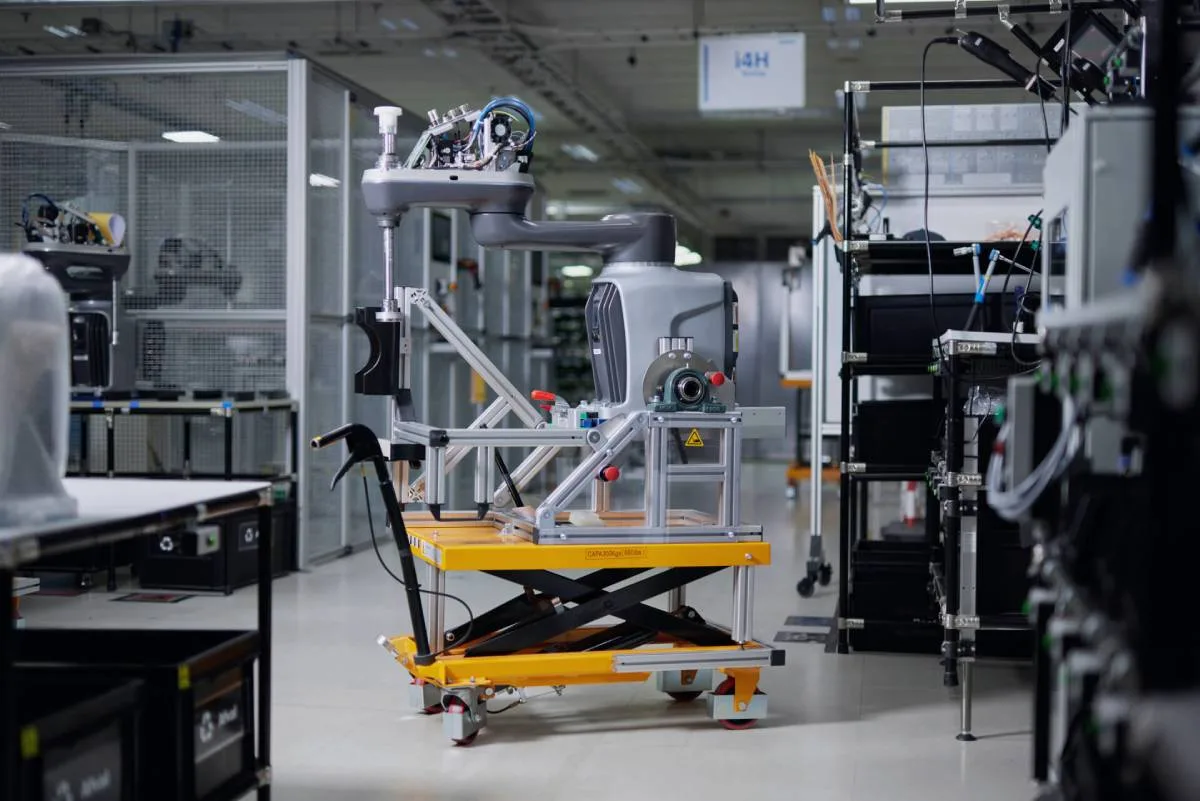
The following are examples to identify in an equipment inquiry. The exact assets, supplier and intended use determine the scope to be reviewed.
A manufacturer may be replacing an unreliable machine, removing a production bottleneck or equipping an entirely new line. Those projects have different cash requirements and delivery risks. Record current capacity, the required output and the role of each machine, without treating a projected productivity increase as guaranteed revenue.
Start with the outcome you want. A lease may suit a defined period of use with a documented return, renewal or purchase route. A purchase-oriented agreement may fit equipment you intend to retain. An equipment loan is a separate borrowing arrangement supporting acquisition; compare its full obligations with the lease proposal.
An FMV purchase option uses the value determined under the agreement, not a pre-agreed nominal buyout. A stated buyout should be checked for any fees, conditions and title-transfer requirements. None of these labels determines the tax or accounting treatment on its own.
For a custom-built line, distinguish factory acceptance testing from installation and site acceptance. List foundations, rigging, electrical supply, compressed air, extraction, integration and operator training separately. Supplier deposits and progress payments need to be discussed before purchase orders are signed; they do not automatically match financing disbursements.
Machine builders and distributors should provide an itemized quote, configuration, delivery milestones and acceptance criteria. If several manufacturers contribute to one line, identify the integrator responsible for overall performance. A consolidated commercial project still needs an accurate asset register and clear supplier responsibilities.
Under OSHA's general machinery standard, 29 CFR 1910.212, one or more methods of machine guarding must protect the operator and other employees in the machine area from hazards such as the point of operation, ingoing nip points, rotating parts, flying chips and sparks. Guards are affixed to the machine where possible, and machines designed for a fixed location must be securely anchored to prevent walking or moving. Those obligations sit with the employer running the machine, whoever owns it, so the quote should state which guards, interlocks and enclosures ship with the machine and which are left to the plant or an integrator.
The lockout/tagout standard, 29 CFR 1910.147, applies when servicing or maintenance could expose employees to unexpected start-up or the release of stored energy. Whenever new machines or equipment are installed, their energy isolating devices must be designed to accept a lockout device, and the employer must develop, document and use energy control procedures and train employees on them. A new press, machining center or robot cell therefore adds work outside the purchase price: written procedures for that machine, updated training and the lockout hardware itself.
Anchoring, foundations and the electrical or pneumatic connections behind the lockout points are building work as much as equipment. List them on a separate line from the machine, agree who performs them, and decide what happens to them if the machine is returned or moved at the end of the term.
OSHA notes that there are currently no specific OSHA standards for the robotics industry, and that many robot accidents happen during non-routine conditions such as programming, maintenance, testing, setup or adjustment, when a worker may be inside the robot's working envelope. The general machinery and lockout requirements still apply to the cell, so safeguarding the envelope is part of the design rather than an option added after delivery.
An automated line often combines a robot from one manufacturer, tooling from another, conveyors, vision systems and controls software assembled by an integrator. For financing, that structure raises three practical questions: which company is responsible for performance of the whole cell, what acceptance test proves it works at the planned rate, and which parts can be removed and reused if the line is reconfigured. Software licenses, programming hours and integration services are usually priced apart from the hardware, and a financing provider decides separately what it can include.
A production asset expected to run for many years calls for careful comparison of purchase-oriented financing with a lease that anticipates return or renewal. Specialized tooling, modifications and the cost of dismantling can materially affect that choice. Record expected service life, spare-parts support and how the machine can be removed from the building.
Request separate amounts for equipment, accessories, freight, installation, software and services. Add expected insurance, maintenance and end-of-term logistics to your internal budget. Keep uncertain costs visible instead of assuming they disappear inside a monthly payment.
For an owned asset, sale-leaseback is a different transaction: ownership, existing liens, valuation and the proposed sale proceeds need review. For a used purchase, add the inspection and service history. A requested amount is a project estimate, not an approved financing limit.
Many equipment finance providers review a project case by case. The reviewer looks at the entity that will sign and how it has handled past obligations, its capacity to carry the payments, the capital behind it, the equipment as security and the conditions around the project. Each provider applies its own criteria; this website does not publish them.
For a production asset, the orders or supply contracts the machine will serve are often the most persuasive context. A standard machine tool with an active secondary market is read differently, as security, from a custom-built line that only fits one plant.
Say early which legal entity would sign and what stands behind the project: a signed customer contract, a parent company, an investor or an institutional end user. Some providers can take this into account, but only if it is mentioned. A project that does not match one provider's focus is a question of fit, not a verdict on the business.
Send your business contact details, equipment description, installation state, approximate USD budget and timing. An itemized supplier quote is useful when available. Financial statements and sensitive credit documents belong in the financing provider’s approved application channel if the project progresses.
It can be discussed, subject to the asset and supplier review. Provide age, condition, service history, ownership information and the proposed price. There is no automatic approval based on age or equipment category.
List those costs separately on the quote. The provider decides which costs can be included in the specific arrangement. Building work, subscriptions and future services should not be assumed eligible simply because they accompany equipment.
No. Read the title, purchase-option and end-of-term clauses. Return, renewal, a nominal buyout and purchase at fair market value are different outcomes and must be documented.
Yes. A newer business should expect more questions about its owners, invested capital and contracts, not an automatic refusal. If an established customer, parent company or backer supports the project, describe that commitment factually in the inquiry. The financing provider decides what it can take into account.
Yes. A supplier can share its quote and describe the project, while the business acquiring the equipment remains the applicant and the financing partner makes its own assessment. Machine builders and distributors should provide an itemized quote, configuration, delivery milestones and acceptance criteria. If several manufacturers contribute to one line, identify the integrator responsible for overall performance. A consolidated commercial project still needs an accurate asset register and clear supplier responsibilities.
Sources checked 2026-10-16. General information does not establish eligibility or the terms of a particular offer.
Industrial & manufacturing
More than $1.1 million · 84 months
Read the project →
Industrial & manufacturing
Close to $1.1 million · Project-specific
Read the project →Industrial & manufacturing
Approximately $688,000 · 72 months
Read the project →Tell us about your project
Send us your project or equipment quote.
Our team will follow up to discuss it with you.