


HVAC & building systems
HVAC equipment within a fitness-center renovation
Approximately $91,700 · 48 months
Read the project →Building equipment
Commercial HVAC and energy equipment financing: rooftop units, chillers, heat pumps and solar, with EPA refrigerant rules and tenant fixture questions.
Building climate control and solar generation require different installation, ownership and operating reviews. Explore the HVAC or solar guide for the project-specific questions before comparing financing structures.
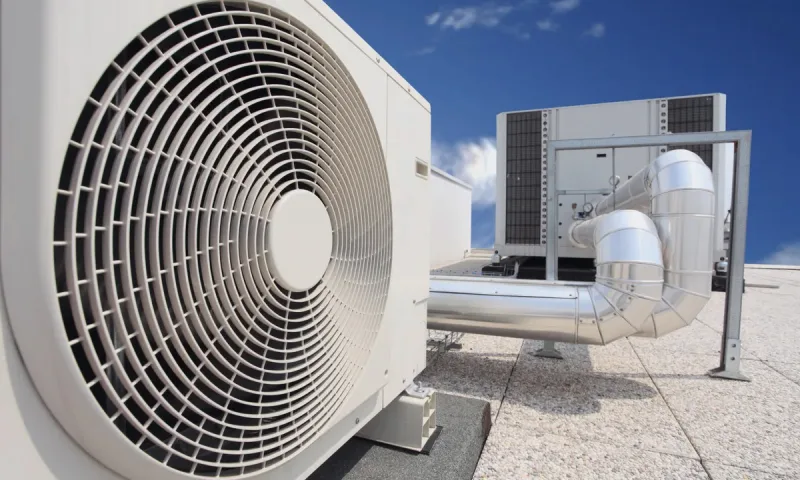
The following are examples to identify in an equipment inquiry. The exact assets, supplier and intended use determine the scope to be reviewed.
Building systems should be scoped around a specific property and operating business. Separate replacement of worn equipment from an energy-generation project. Identify the property owner, tenant, system user and prospective contracting entity before combining their needs into one budget.
Start with the outcome you want. A lease may suit a defined period of use with a documented return, renewal or purchase route. A purchase-oriented agreement may fit equipment you intend to retain. An equipment loan is a separate borrowing arrangement supporting acquisition; compare its full obligations with the lease proposal.
An FMV purchase option uses the value determined under the agreement, not a pre-agreed nominal buyout. A stated buyout should be checked for any fees, conditions and title-transfer requirements. None of these labels determines the tax or accounting treatment on its own.
Equipment delivery, installation, inspection and permission to operate are different milestones. Separate roof work, electrical upgrades, permitting and engineering from the equipment quote. A project can be technically sound yet still depend on approvals outside the supplier’s control.
Installers should identify equipment specifications, expected commissioning dates and the party responsible for performance and service. A performance guarantee, if any, comes from the relevant contract and is distinct from financing.
Start with why the project exists. A rooftop unit that fails in July and a planned replacement program are different projects: the first is driven by lead times and the equipment in stock, the second leaves room to compare systems, phase the work and line up the financing before the crane is booked. Say which one it is, and list each unit by model, capacity and the area it serves.
Refrigerant rules now shape which equipment can be installed. Under the EPA Technology Transitions program (40 CFR Part 84, subpart B), the sector table EPA updated in August 2026 lists a global warming potential limit of 700 for new residential and light commercial air conditioning and heat pump systems and for comfort-cooling chillers from January 1, 2025, and for variable refrigerant flow (VRF) systems from January 1, 2027. EPA revised parts of the program in a May 2026 reconsideration rule and presents its tables as information, not as a compliance reference. Ask the installer to confirm in writing which refrigerant the proposed system uses and that it can be installed on the planned date. Components used to repair an existing system are outside these restrictions.
Anyone who connects gauges to the system, adds refrigerant or recovers it must hold the matching EPA Section 608 technician certification. For comfort-cooling appliances holding 50 pounds or more of an ozone-depleting refrigerant, the owner or operator must repair leaks above a 10% annual leak rate within 30 days, and a 2024 AIM Act rule adds leak-repair duties for many appliances holding 15 pounds or more of HFC refrigerant. Under a lease, write down who keeps the service and leak records and who pays for repairs, in the service agreement and in the lease itself.
A rooftop unit, a chiller or a split system fastened to the walls is attached to a building. The Uniform Commercial Code calls goods so related to particular real property that an interest in them arises under real property law "fixtures". That is why a financing partner asks who owns the building, whether a mortgage lender holds an interest in it and whether the applicant is a tenant.
In the uniform text of UCC section 9-334, a security interest in fixtures generally ranks behind a conflicting owner or mortgage lender of the property, unless an exception applies, such as a timely fixture filing in the real property records or a written consent or disclaimer from that owner or lender. In practice, a financing partner may ask a landlord or a mortgage lender to sign such a consent or waiver. Each state enacts the UCC with its own variations, and the financing partner and its counsel decide what documentation they need.
For a tenant, compare three dates: the remaining term of the premises lease, the proposed financing term and the expected life of the system. Then read what the premises lease says about alterations, ownership of improvements at move-out and restoring the space. A financing term that runs past the expected move-out date, or a system the landlord will own once installed, is a question to settle before signing.
Consider site access, maintenance, removal and property restoration alongside payments. Tax credits, incentives and projected energy savings need separate current verification. They should not be treated as automatic reductions in the financing cost.
Request separate amounts for equipment, accessories, freight, installation, software and services. Add expected insurance, maintenance and end-of-term logistics to your internal budget. Keep uncertain costs visible instead of assuming they disappear inside a monthly payment.
For an owned asset, sale-leaseback is a different transaction: ownership, existing liens, valuation and the proposed sale proceeds need review. For a used purchase, add the inspection and service history. A requested amount is a project estimate, not an approved financing limit.
Many equipment finance providers review a project case by case. The reviewer looks at the entity that will sign and how it has handled past obligations, its capacity to carry the payments, the capital behind it, the equipment as security and the conditions around the project. Each provider applies its own criteria; this website does not publish them.
Equipment fixed to a building is hard to remove, so a reviewer leans on the strength of the signing entity and on its right to occupy the site. Say whether the applicant owns the building or leases it, and for how long.
Say early which legal entity would sign and what stands behind the project: a signed customer contract, a parent company, an investor or an institutional end user. Some providers can take this into account, but only if it is mentioned. A project that does not match one provider's focus is a question of fit, not a verdict on the business.
Send your business contact details, equipment description, installation state, approximate USD budget and timing. An itemized supplier quote is useful when available. Financial statements and sensitive credit documents belong in the financing provider’s approved application channel if the project progresses.
It can be discussed, subject to the asset and supplier review. Provide age, condition, service history, ownership information and the proposed price. There is no automatic approval based on age or equipment category.
List those costs separately on the quote. The provider decides which costs can be included in the specific arrangement. Building work, subscriptions and future services should not be assumed eligible simply because they accompany equipment.
No. Read the title, purchase-option and end-of-term clauses. Return, renewal, a nominal buyout and purchase at fair market value are different outcomes and must be documented.
Yes. A newer business should expect more questions about its owners, invested capital and contracts, not an automatic refusal. If an established customer, parent company or backer supports the project, describe that commitment factually in the inquiry. The financing provider decides what it can take into account.
Yes. A supplier can share its quote and describe the project, while the business acquiring the equipment remains the applicant and the financing partner makes its own assessment. Installers should identify equipment specifications, expected commissioning dates and the party responsible for performance and service. A performance guarantee, if any, comes from the relevant contract and is distinct from financing.
Yes, the inquiry can come from a tenant. Describe the premises lease: its remaining term, the landlord's permission for the installation and what happens to the system at move-out. Because installed HVAC can become a fixture, a financing partner may ask for the landlord's or mortgage lender's written consent; the partner decides what it needs. Comparing the financing term with the expected occupancy is worth doing early.
They can. EPA lists a global warming potential limit of 700 for new residential and light commercial air conditioning and heat pump systems installed from January 1, 2025, and from January 1, 2027 for VRF systems, with some transition provisions revised in 2026. Components used to repair an existing system are outside these restrictions. Ask the installer to confirm the refrigerant and the installation date on the quote; EPA presents its tables as information, not as a compliance determination.
Sources checked 2026-09-20. General information does not establish eligibility or the terms of a particular offer.
HVAC & building systems
Approximately $91,700 · 48 months
Read the project →HVAC & building systems
Approximately $1.4 million–$1.6 million · 84 months
Read the project →
HVAC & building systems
$115,000–$229,000 · 60 months
Read the project →Tell us about your project
Send us your project or equipment quote.
Our team will follow up to discuss it with you.